The thermarest xlite is one of those pieces of gear that disappears into a system once you understand it. On a cold October night near the Indian Peaks, I noticed it only when I rolled over and heard the familiar whisper of fabric against fabric. The rest of the night was quiet: wind pressing at the shelter, frost gathering on the vestibule, my knees no longer touching frozen ground.
That is the real appeal. This is not a luxurious mattress, and it does not pretend to be one. It is a lightweight, insulated sleeping pad for hikers who count comfort in usable sleep, not in the thickness of a hotel bed. After years of carrying inflatable pads through Colorado and the Southwest, I have learned that the right pad earns its place by doing three things consistently: keeping the cold out, surviving ordinary trail abuse, and packing without drama.
What the thermarest xlite gets right
The first strength is warmth for the weight. The thermarest xlite uses internal reflective layers to slow radiant heat loss, giving it a strong warmth-to-weight ratio for three-season backpacking. I have used mine on nights below freezing with a properly rated sleeping bag and a thin foam sit pad underneath. The pad was not the weak link in that setup.
The second strength is packability. Rolled tightly, it takes up little room in a backpack, leaving space for food or an extra layer. That matters on long carries where every item competes for volume. A bulky self-inflating pad can feel comfortable at home and irritating by day three. The XLite stays small enough that I do not have to build my entire packing strategy around it.
The current NeoAir XLite NXT version is also noticeably quieter than older generations. “Quieter” does not mean silent. There is still a light crinkle when you turn, particularly inside a taut nylon shelter. But the old metallic crackle has been reduced enough that it no longer dominates the night.

Sleeping comfort and the narrow question
The standard regular size is where the decision becomes personal. It saves weight and space, but the width can feel narrow for a broad-shouldered sleeper or anyone who moves constantly at night. I sleep mostly on my side, and after a few nights my hips learned the edges. That adaptation is not a criticism; it is the trade being made.
The thermarest xlite works best when inflated firmly but not rock hard. Too little air lets hips and elbows bottom out. Too much air creates a rounded surface that encourages you to slide toward the edges. I use short breaths near camp elevation, then adjust after lying down for a minute. The difference between comfortable and annoying is often a small release of air.
For taller hikers, the long version gives more room but adds weight and packed volume. The wide version is more forgiving for restless sleepers, though it begins to compete with heavier pads on the scale. A useful test is simple: lie on your back and side on a floor pad in a store, then measure how often your elbows or knees leave the surface. If that happens repeatedly, ultralight dimensions may cost you sleep.
Durability, punctures, and camp habits
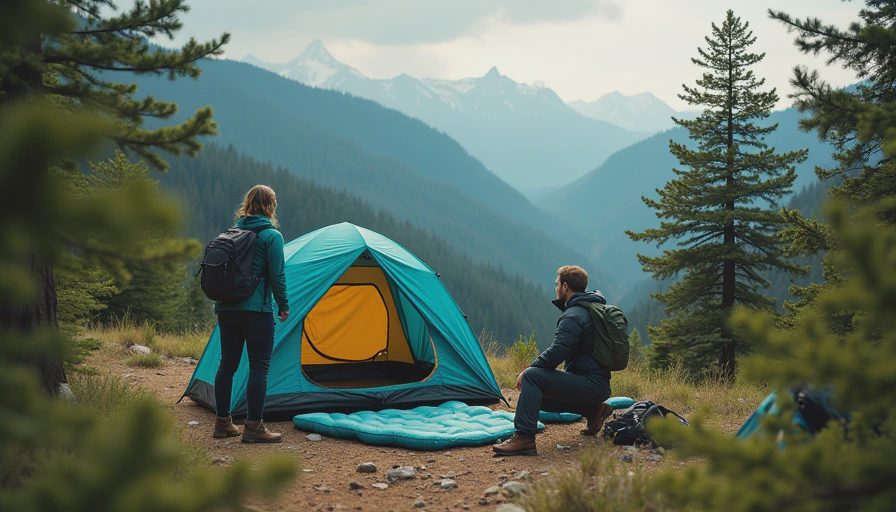
An inflatable pad is not fragile in the way people sometimes assume, but it is not a groundsheet either. The thermarest xlite has a thin shell designed to save weight. I have carried mine across talus, pine duff, and rough desert camps without a leak, but I do not drag it over rocks or inflate it directly on sharp gravel.
The routine matters more than bravado. Before pitching, I clear sticks and thorny debris from the sleeping area. I check the floor for grit. I keep the pad away from stove fuel, hot cookware, and the dog’s enthusiastic nails. In a shelter, I use the tent floor as protection rather than treating the pad like a sacrificial layer.
Carry the patch kit and know where it is before dark. A slow leak can be difficult to locate at camp, especially in cold weather. If the pad loses firmness overnight, add air and mark the suspected area with a small piece of tape. At home, submerge it in a bathtub or use soapy water around the valve and seams. Do not throw away a pad because of one puncture; a careful repair is usually straightforward.
Valve, inflation, and morning packing
The thermarest xlite uses a one-way valve that makes inflation less frustrating than older designs. I still prefer a pump sack when one is compatible with the system because it keeps moisture from my breath out of the pad and saves a few minutes of effort at altitude. In dry Colorado air, that small improvement is welcome after a long day.
Morning packing is less elegant. Open the valve, fold the pad lengthwise, and push the air toward the opening in stages. Rolling immediately often traps air and produces a package larger than necessary. I usually fold it once, press out most of the air, fold again, and then roll it tightly. The process takes less than a minute once it becomes muscle memory.
A pump sack can also double as a dry storage bag for socks or a base layer, though I keep the pad itself loosely stored at home with the valve open. Long-term compression is not a useful test of any inflatable pad, and there is no reason to make storage harder than necessary.
How it compares with other sleeping pads
The thermarest xlite sits between bare-bones foam and plush insulated air mattresses. A closed-cell foam pad is cheaper, nearly impossible to puncture, and useful as a sit pad, but it takes up valuable exterior space and offers less cushioning. A thicker insulated air pad can feel better for camp comfort, especially for side sleepers, but commonly adds several ounces and occupies more room.
The Sea to Summit Ether Light XT is a reasonable alternative for hikers who prioritize thickness and a softer surface. Exped’s Ultra series also deserves attention when durability and rectangular geometry matter more than absolute minimum weight. Neither choice is universally better. A hiker with poor sleep may gain more from extra thickness than from saving a few ounces.
For me, the XLite remains the balanced option for summer routes, shoulder-season trips, and long carries where volume matters. It is not the pad I would choose for car camping, where weight and packed size stop being important. In that setting, comfort should win without apology.
Is the thermarest xlite worth carrying?
The answer depends on what failed on your last trip. If you slept cold on a thin foam pad, the thermarest xlite can solve a real problem. If you woke with numb hips because your pad was too narrow, the regular model may not solve it. If every ounce matters and you already sleep well on a narrow surface, it remains one of the cleaner choices available.
Before buying, compare your sleeping bag rating, shelter floor, and typical nighttime temperatures. A warm pad cannot compensate for a summer bag in winter conditions. Similarly, a pad rated for cold nights will not make an exposed campsite safe in lightning or high wind. Gear is part of risk management, not a substitute for it.
My advice is to borrow one for two nights if possible. Inflate it at home, then sleep on it after a full day when your body is tired. Try it on your side, listen to the movement noise, and pack it into the bag you actually carry. The answer becomes clearer when the test includes fatigue instead of a five-minute shop-floor lie-down.
Final field judgment
The thermarest xlite has stayed in my kit because it solves the quiet problems that accumulate over a long route: cold ground, limited pack space, and the need to wake up functional. It asks for care, accurate sizing, and a willingness to accept some movement noise. Those are fair terms for a pad that remains light enough to carry without resentment.
No piece of equipment removes the uncertainty of a night outside. Weather turns, ground conditions change, and sometimes sleep simply does not come. But a dependable pad reduces one variable, and that matters when the alarm sounds before dawn and the next section begins in the dark.
Use a groundsheet or careful site selection, carry the repair kit, and choose width based on how you actually sleep rather than how you wish you slept. Then let the pad become unremarkable. The best gear often reaches that point: present when needed, forgotten when not. One steady step.



No comments yet — grab the first one.