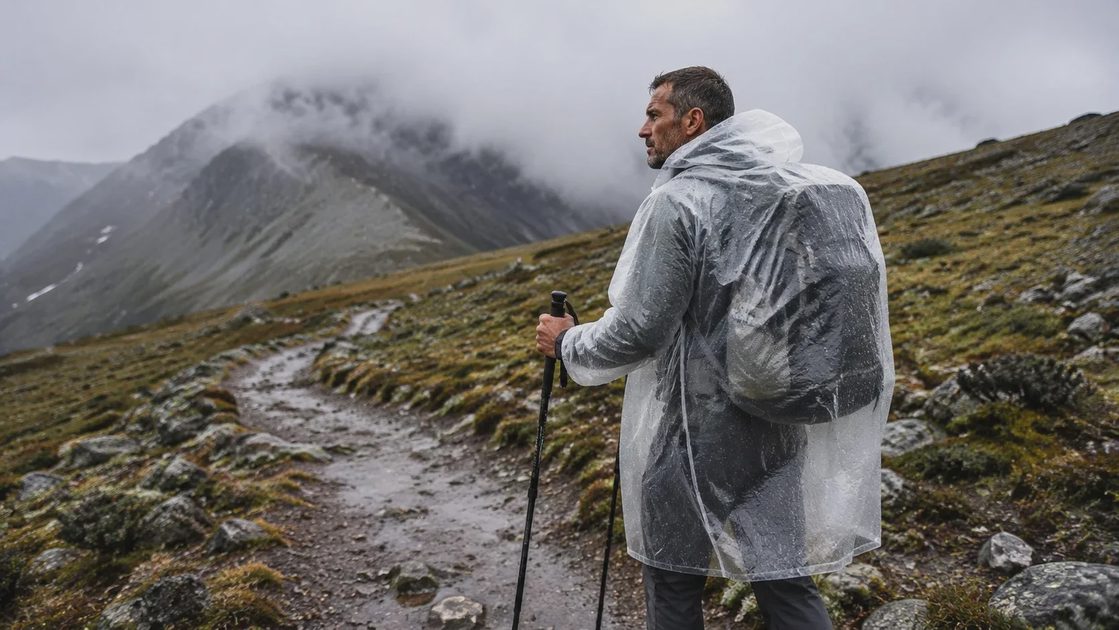
After more than a decade of hiking in the Rockies, I know better than to leave a rain layer behind. I did it anyway.
I was halfway up a side trail near the Indian Peaks last summer when the sky shifted. One minute the clouds looked distant. The next, cold rain was driving sideways across the ridge. My rain jacket was still in the car at the trailhead. I had packed light that day—camera, a couple of rolls of film, water, the usual—and decided the forecast looked clear enough. By the time I reached the next stand of trees I was soaked through, cold, and annoyed at myself for the kind of basic mistake I usually avoid.
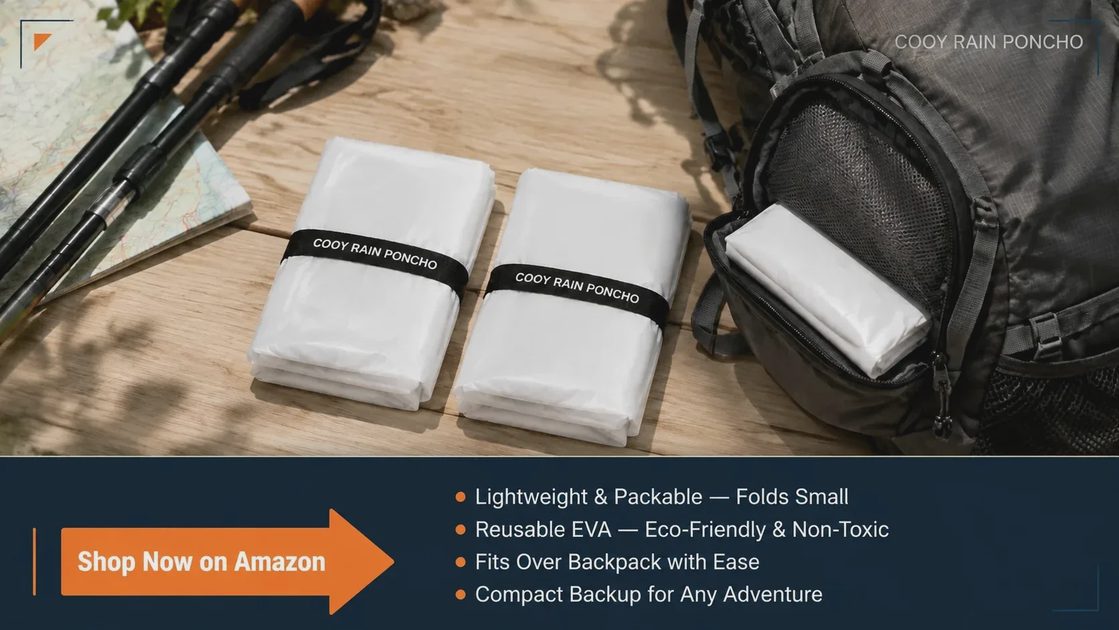
That afternoon I ordered a pair of COOY reusable EVA rain ponchos. At roughly $9.95 for the two-pack, they cost far less than another technical shell. They have stayed in the outer pocket of my pack ever since. Here is what this rain poncho for hiking actually does on trail, where it works, and where it falls short.
See Current Price & Reviews on Amazon
Why I Bought These at All
I already own a solid technical rain shell. I reach for it on any trip where the forecast shows real weather or where I will be above treeline for hours. The question was never whether I needed another expensive jacket. The question was whether I needed cheap insurance for the days when I deliberately leave the shell behind.
On short afternoon hikes, or on photography days when the pack already holds a camera body, film, a small lens, and water, I do not always want another bulky layer. The forecast looks stable, so the shell stays in the car. That is exactly when sudden showers appear. At roughly $9.95 for two, these ponchos are a much cheaper form of insurance than buying a second technical piece I would rarely use.
What I Needed From a Backup Layer
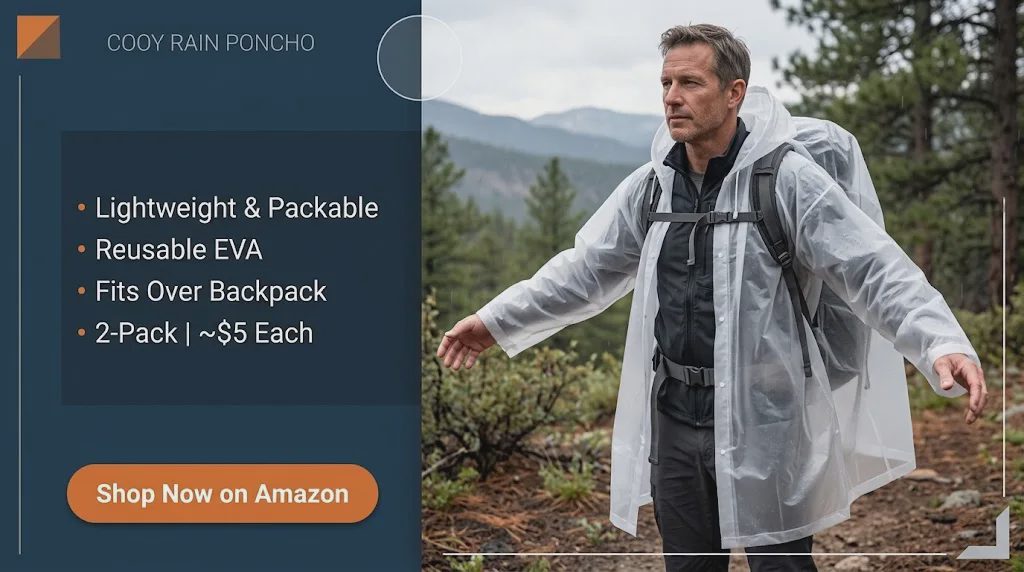
The requirements were simple and practical:
Small enough to disappear into a side pocket
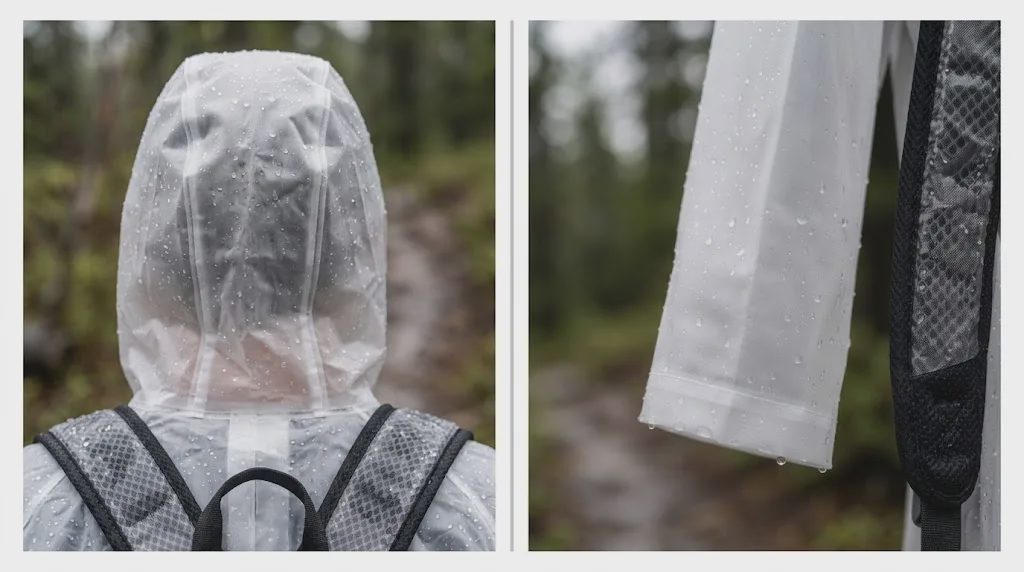
Wide enough to go over a loaded daypack without fighting the straps
Able to keep water off shoulders and torso long enough to reach cover or finish the descent
Inexpensive enough that leaving one behind would not sting
What You’re Actually Getting
Detail | My take |
|---|---|
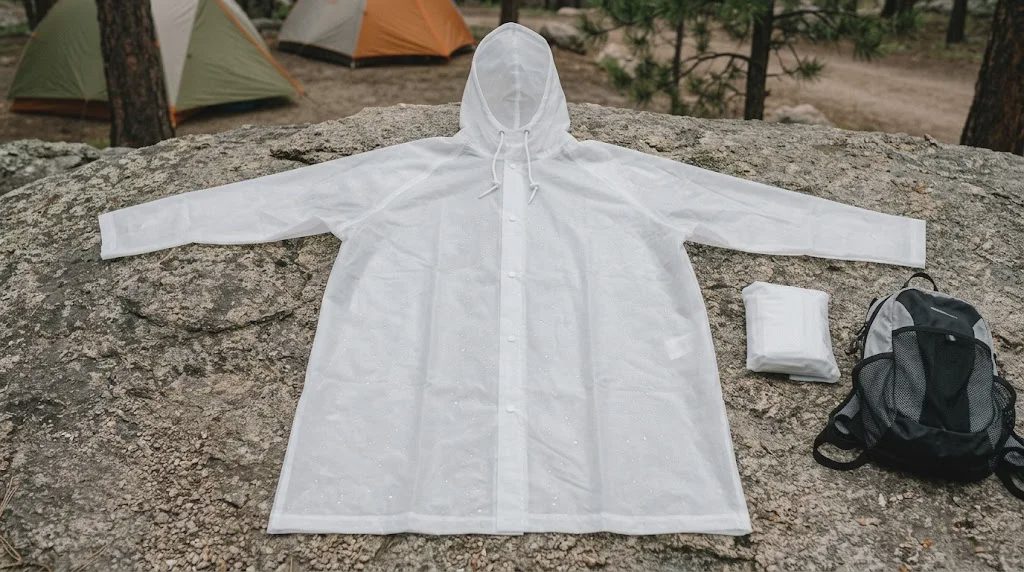
Material | 100% EVA — soft, not stiff plastic |
Size | 60" × 27.5" — enough length for the upper body and pack |
Pack coverage | Wide enough for a loaded daypack |
Hood | Adjustable drawstring — stays put once tightened |
Sleeves | Long, open cuffs |
Packability | Folds down small enough for an outer pocket |
Quantity | Two ponchos |
Price when I bought | About $9.95 for the pair |
The width is the detail that matters most. Some inexpensive ponchos can be awkward over a loaded pack. These weren't.
See Current Price & Reviews on Amazon
Trail Test
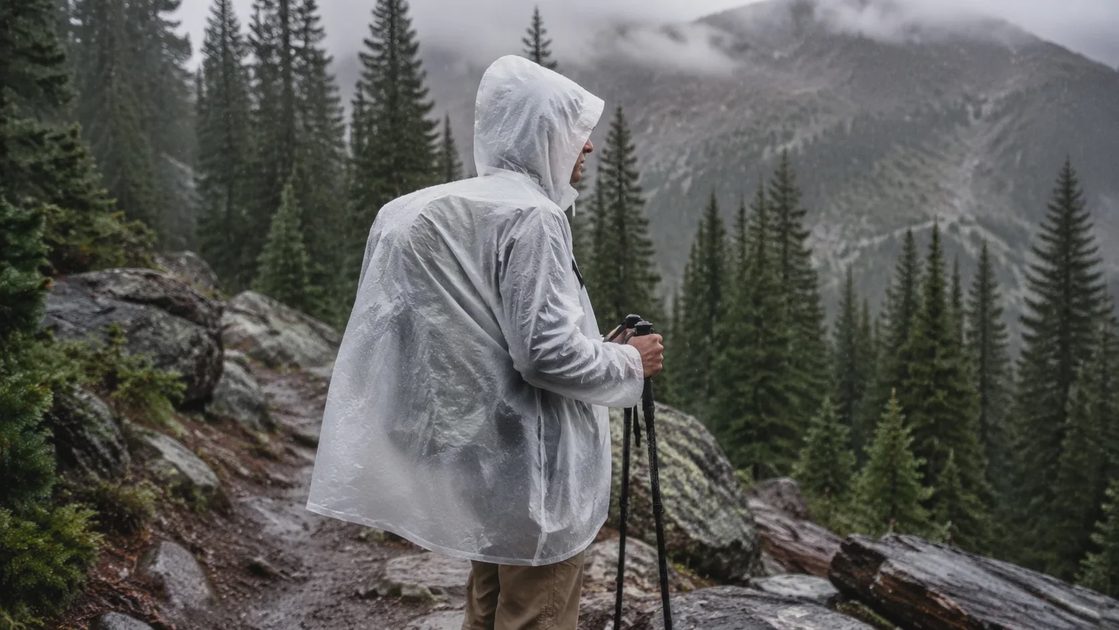
I first used one on a short overnight near the Front Range. Afternoon showers arrived earlier than the forecast suggested. Putting the poncho on over a loaded daypack took under a minute—no need to remove the pack. The extra width covered the shoulder straps cleanly. Once the hood drawstring was tightened, it stayed in place. Water beaded and ran off. My shoulders and upper body stayed dry for the hour it took to reach the tent site.
The material has almost no weight once on. It does not feel like the brittle plastic of many disposable versions. After the rain stopped I shook it out, wiped the surface, and folded it back into its original small size. It returned to the outer pocket without adding noticeable bulk.
On a later section of the Colorado Trail the same pair handled a longer stretch of steady rain. The material held without tearing at the seams or hood. On a warm uphill climb I noticed the inside getting damp even though the rain was not getting through. That was sweat, not leakage. A poncho in this price range is not going to breathe like a technical shell, and I would not expect it to. For short-to-moderate exposure it still kept the base layers from becoming completely wet.
What Worked
Several small things made these useful in practice:
The width covers a daypack without requiring you to remove it first.
The material folds small and resists permanent creasing, so it stays ready for the next opening.
After several uses and simple wipe-downs, both ponchos remain intact. That matches the reusable claim better than the thin single-use versions that tear on first outing.
On photography hikes, when the pack is already carrying more than I prefer, the extra weight and bulk of these is almost nothing.
That is why they have earned a permanent place in my pack on uncertain days.
Where It Falls Short
These are not a replacement for a quality rain jacket on multi-day trips with sustained wet weather. The limits showed up clearly:
On sustained uphill effort the inside dampens from sweat. That is the expected trade-off with this material.
There is no lower closure beyond the natural drape of the fabric.
Once temperatures drop and the rain continues, the lack of insulation becomes noticeable.
I would not treat these as protection during electrical storms or prolonged exposure above treeline. They keep water off the body for a while. They do nothing for warmth once conditions stay cold and wet. That is simply outside what a thin EVA layer can do.
For the intended role—compact backup when the main jacket is left behind—the limits are acceptable. The price keeps the risk low.
Why I Carry This Instead of Another Rain Shell
A technical shell is still the right tool when the weather deserves one. I carry it on longer routes, early starts above treeline, and any day the forecast shows real systems moving through.
These ponchos solve a different problem. They are the layer I reach for when I have already decided the shell can stay behind, yet I still want something between me and a sudden shower. On photography days especially, when the pack is already carrying glass and film, the last thing I want is another substantial piece of clothing. A small, inexpensive backup that covers a pack without adding much weight is exactly the insurance that fits.
See Current Price & Reviews on Amazon
Who These Suit
These make sense for:
Day hikers who sometimes leave the full rain jacket in the car
Section hikers who want a secondary option that does not add weight
Anyone carrying extra camera gear and trying to keep the pack light
People who have finished a hike colder and wetter than necessary because the shell stayed at the trailhead
They are less useful if you already carry a reliable shell on every outing and never leave it behind. They are also the wrong tool for cold, multi-hour exposure where breathability and insulation matter more than simple waterproofing.
The Practical Takeaway
I still carry a proper rain jacket when the weather deserves one. But on uncertain days these stay in the outside pocket. They fold small, cover a pack, keep the torso dry during short-to-moderate rain, and cost little enough that I treat them as consumable backup rather than critical kit.
I do not carry them because they are the strongest rain gear I own. They are not. I carry them because they solve one small problem without asking much in return.
A little extra insurance. A little less weight. One less reason to turn around.
One steady step.

No comments yet — grab the first one.