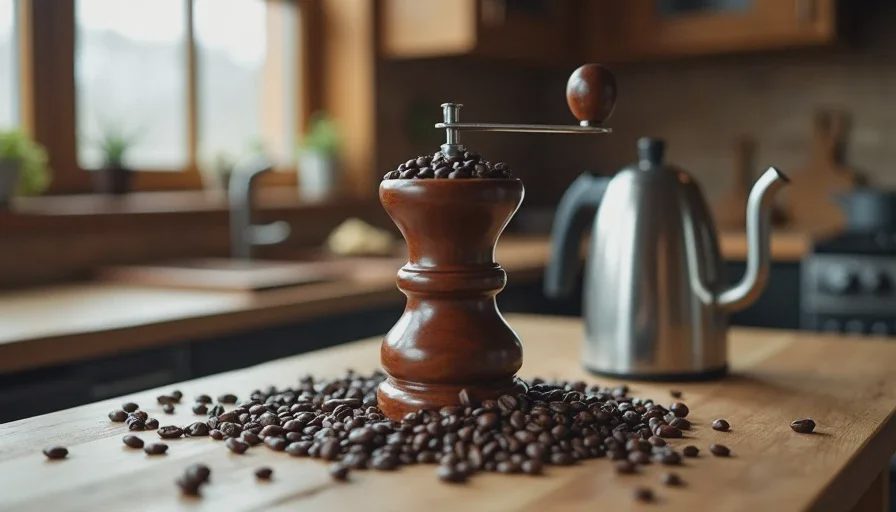
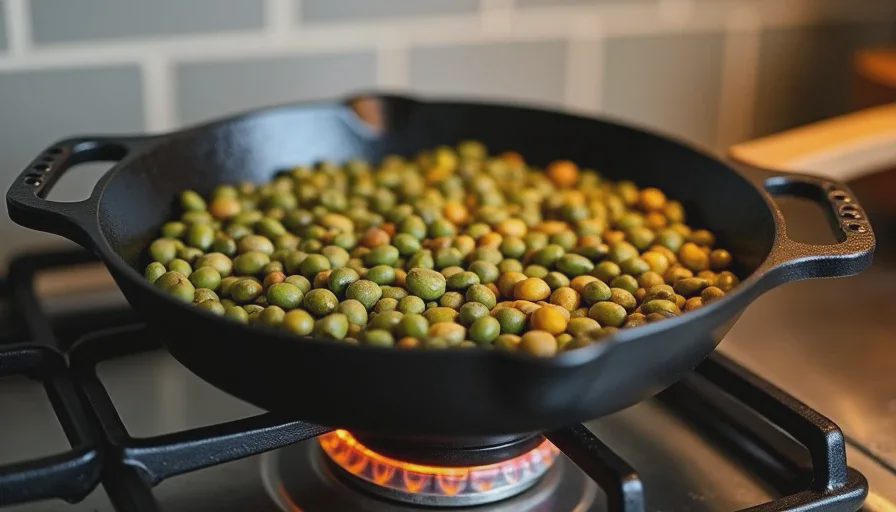
There is a particular kind of quiet that settles over Boulder in January, when the high country is locked under snow and the trails below have gone hard and brown. That is when my attention turns inward, toward the kitchen counter and the small cast-iron pan that has roasted more batches of green coffee than I can count. My backpacking coffee setup began not on the trail but here, at home, where the discipline of small batches and careful attention mirrors the way I think about pack weight — every gram accounted for, nothing wasted, nothing carried that does not earn its place.
The Off-Season Kitchen Becomes Basecamp
The off-season is not a pause. It is where the next season's habits are formed, tested, and refined. When the Indian Peaks are buried and the Colorado Trail above 10,000 feet is impractical, my kitchen becomes the place where I tinker with the rituals that will eventually travel with me into the backcountry.
Why I Started Roasting
It started simply enough. Thea brought home a half-pound of green beans from a friend who works at a roastery in Denver, and I cracked them in a cast-iron pan on a Tuesday evening because there was nothing good on television and the wind outside was doing everything it could to rattle the windows. What came out was uneven, half-city and half-charred, and it tasted like grass and smoke. But somewhere in that cup — underneath the flaws — there was something alive. Something the pre-roasted bags on the shelf had lost months ago.
I kept at it. Not because the early results were good, but because the process demanded the same kind of focused attention that route-finding demands. You watch for color change. You listen for the first crack. You smell for the moment when the sweetness peaks and the char begins. It is a sensory checklist that feels familiar to anyone who has watched cloud build-up over a ridgeline and tried to read what the next hour will bring.
Roast Level | First Crack Timing | Flavor Notes | Field Brew Method |
|---|---|---|---|
Light | 7-8 minutes | Bright, floral, acidic | Pour-over (home only) |
Medium | 9-10 minutes | Balanced, sweet, nutty | Pour-over or AeroPress |
Medium-Dark | 11-12 minutes | Rich, chocolate, smoky | AeroPress (trail preferred) |
Grams Matter on the Trail and at the Scale
The crossover between roasting and backpacking is not metaphorical. It is literal. The same digital scale that weighs my coffee beans — 18.2 grams for a single cup, measured to the tenth — is the one I use to weigh my cook kit before a trip. The obsession with precision is not about control. It is about knowing what you carry and why, and that philosophy extends directly to how I build my backpacking coffee setup for the field.
Dialing In the Pour-Over
At home, my pour-over routine is a 30-second bloom, a slow center pour, and a total drawdown of about two and a half minutes. I use a gooseneck kettle because the control matters. On the trail, I use an AeroPress because it is lighter, more forgiving of inconsistent water temperature, and nearly indestructible in a pack. The principles transfer even when the tools change.
Water temperature: 200°F at home (kettle with thermometer), approximated on trail by letting boiled water sit for 90 seconds
Grind size: medium-fine at home (hand grinder with ceramic burrs), slightly coarser on trail because my travel grinder is less precise
Ratio: 1:16 coffee to water, both at home and on the trail — this never changes
Thea drinks her coffee with cream and has no patience for any of this. She watches me weigh beans on a Sunday morning and shakes her head, but she also never turns down a cup. That is the thing about rituals — they are absurd to everyone except the person performing them, and even the skeptic at the table can taste the difference.
One steady step. That is what roasting taught me. You do not go from burned pan coffee to a clean cup in one leap. You adjust one variable at a time. You take notes. You taste. You adjust again. It is the same process as lightening a pack over a season — you remove one item, hike twenty miles, and see if you missed it. Usually you do not.
What Carries Over to the Field
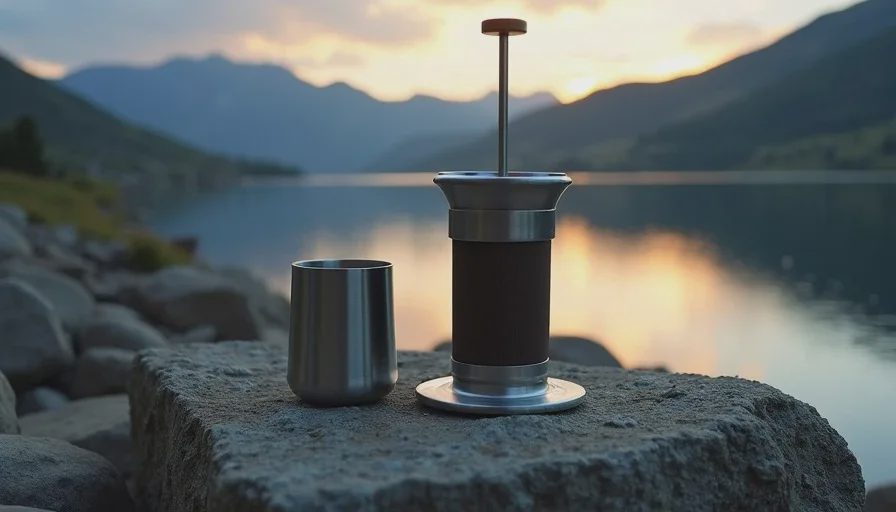
The trail is where the kitchen lessons prove themselves. On the fourth morning of a Colorado Trail section hike last September, I brewed a cup at 11,400 feet using beans I had roasted three days before leaving. The water boiled at a lower temperature — physics, not opinion — and the extraction was slightly under, but the cup still carried the sweetness I had dialed in at home. That is the goal of a trail-ready backpacking coffee setup. Not to recreate the kitchen experience in the backcountry, but to carry enough of it forward that the ritual still means something when you are crouched behind a boulder in the wind, waiting for the AeroPress to finish its work.
Off-season is not waiting. It is preparation disguised as comfort. The beans roast. The scale measures. The kettle pours. And somewhere in all of it, the next season takes shape — one gram, one cup, one steady step at a time.

No comments yet — grab the first one.