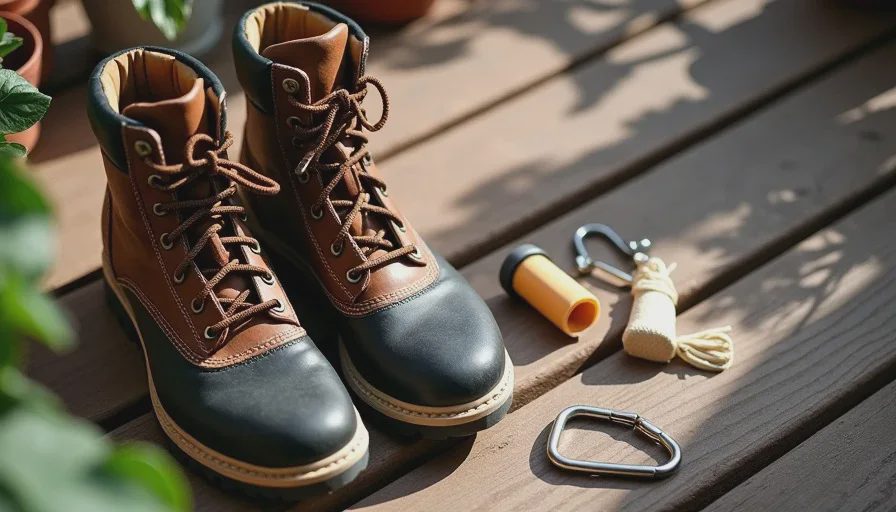
The question I get most isn't what to buy — it's when to stop trusting what's already in the closet. After a decade of carrying the same core pieces, I've built a simple framework for that decision, and this is it: a hiking gear durability long-term review I keep in my head and update every season, built around the four pieces that carry the weight — boots, sleeping bag liner, tent, and backpack.
The Framework
Most gear fails on a schedule you can predict if you track three things: what it does to your body, what it does in weather, and what fails next if you do nothing. Everything I own falls into one of three buckets, and the bucket decides the rule. Gear reviews talk about first impressions; this framework is about year six — the part of a hiking gear durability long-term review that almost nobody writes.
Three Buckets, Not Three Opinions
Replace on a clock: items that wear evenly and cheaply — the liner, insoles, laces, guylines. You swap these on a schedule, not on a failure.
Repair until it won't: items whose fixes hold and whose replacement is a big event — the tent, the backpack, the quilt. You patch, seam-seal, and restitch until a fix stops holding.
Replace on a trigger: items where a specific failure ends the argument — boots when the midsole dies, a pack when the frame lets go, anything where the stitching holds your weight.
The Three Questions
Before I spend money or time on any piece, I ask three questions, in order. Is this failure cosmetic, structural, or safety-related? How long will the repair hold — a season, or a single trip? And if I do nothing, what fails next? The third question is the one that has saved me the most money. Most gear I've retired was never actually broken — it was one step away from breaking something else.
Boots: The Sole Decides
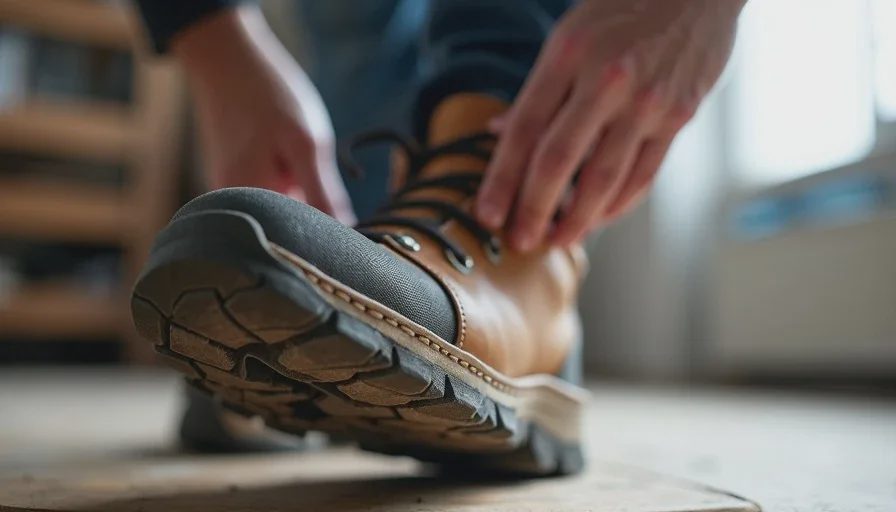
Boots are the one thing I replace on a mile count, and the trigger is always in the midsole, never in the tread. A sole with full tread and a collapsed midsole is a boot that looks fine and punishes your knees. A sole with half its tread and a firm midsole is still doing its job. I don't make this decision by looking at the bottom of the boot. I make it by walking, and by pressing.
The Midsole Test
Here's the test I use. Press your thumb into the side of the sole, just above the outsole lug. If the foam springs back, the boot has life left. If it holds the dent, the midsole is done — no amount of tread will save it. My last pair carried me about seven hundred trail miles before the dent started holding; the pair before that went a little further. The number varies with your weight and your terrain, but the test doesn't lie, and your knees will confirm it about a week before you're ready to admit it.
Repair vs. Replace
Resole: a full resole is worth it when the upper is sound and the rand is intact. I've gotten two lives out of a good stitchdown pair this way.
Replace: once the midsole is dead or the ankle collar stretches, no resole saves it. That's the trigger, and it's non-negotiable.
Always replace the cheap parts: laces and insoles cost almost nothing and should be swapped on a clock, not on a failure. I replace insoles every season and laces the moment they stop adjusting cleanly.
Liner, Tent, Bag
The Liner (Replace on a Clock)
The sleeping bag liner is the consumable everyone forgets. It takes the sweat and the skin oils so your quilt doesn't have to, and it quits working quietly — you just wake up damper than you used to. I wash mine, and I replace it every two to three seasons or when it stops pulling moisture off me at night. It's the cheapest insurance in the kit, and I treat it like toothpaste: a recurring cost, not a piece of gear to mourn.
The Tent (Repair First)
The tent is a repair-first object. I've patched holes, sealed seams twice, replaced stakes and guylines, and splinted a pole — and I carry a small repair kit precisely so these are trail-adjacent decisions, not trail-end decisions. The tent I use now is nine years old with two patches on the fly, and it's still dry in a proper storm. The replace trigger is specific: when the fly's coating starts to flake and turn sticky to the touch, or when a seam fails in a way that can't hold a patch. Both are visible long before they're dangerous, if you look at the fabric in good light twice a year.
The Backpack (Repair Until It Won't)
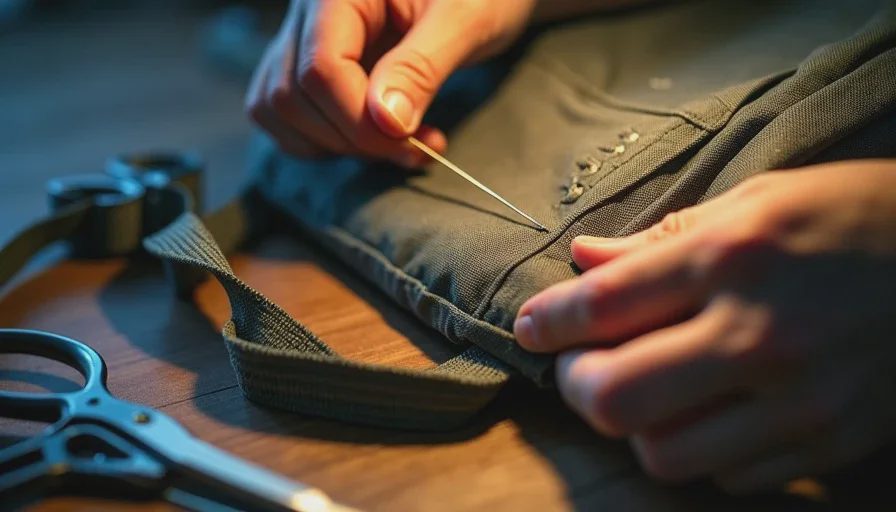
Almost everything on a pack is fixable. I've restitched shoulder straps, replaced buckles and zipper pulls, and re-glued webbing where it wraps the frame — a needle, heavy thread, and a spare buckle or two cover most of a pack's life. The two replace triggers are a bent or cracked frame and a load-bearing seam that lets go. When the frame goes, no amount of stitching helps; that's the day I start over. Everything else, I repair.
The money was never the point of any of this. The trust was. Gear that earns its keep gets fixed, and gear that can't be trusted gets retired, and the difference between the two is honest record-keeping — the long-term view on hiking gear durability, kept in pencil, updated every season. One steady step, and a kit that can take it.




No comments yet — grab the first one.