The BV500 is the bear canister I reach for when a route requires hard-sided food storage and I do not want to spend the evening negotiating with a complicated latch. Mine has traveled through the Indian Peaks, the San Juans, and long stretches of the Colorado Trail. It has picked up scratches, dust, and the faint smell of oatmeal. The lid still closes cleanly.
This is not a review based on an afternoon in the backyard. A bear canister earns its place through repetition: packing it before dawn, opening it with cold fingers, fitting it into a pack that is already too full, and living with its shape for several days. The BV500 has remained useful because it is simple, roomy, and familiar. It is not perfect, but its shortcomings are easy to understand before you leave the trailhead.
Capacity and the shape of the problem
The BV500 holds roughly 11.5 liters, or about 700 cubic inches. That is enough for several days of food for one person if meals are dense and packaging is controlled. For two people, it can work for a shorter trip, but I would not treat the advertised capacity as a promise. Chips, bulky tortillas, and loose snack bags consume space quickly.
The cylinder is wide rather than tall. That matters more than the capacity number. A tall, narrow food bag can disappear into a pack; the BV500 occupies a broad section of the main compartment. In my 60-liter pack, it rides best horizontally near the top, where I can reach it without unpacking shelter and clothing. In a smaller pack, it becomes the central object around which everything else has to be arranged.
I pack meals in thin bags, remove cardboard, and group food by day. The first morning's breakfast sits near the lid. Dense items such as bars, nut butter, and dehydrated meals fill the curved edges. A compact stove and fuel canister do not belong inside unless the canister is empty and clean. Keeping cooking equipment separate makes the container easier to use and keeps food odors from spreading to gear.
Using the BV500 when the weather turns
The lid uses two locking tabs and a rotating mechanism. In warm weather, opening it is straightforward. In freezing conditions, the plastic can feel less forgiving, especially if snow or grit has worked into the threads. I have learned to wipe the rim before closing it and to avoid forcing the lid when food is pressing upward from inside.
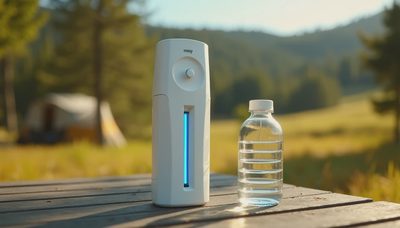
The BV500 is transparent, which sounds like a small convenience until you are standing outside a tent in the dark. I can see whether breakfast is still inside without opening everything. That reduces rummaging and makes morning departures quieter. The clear body also reveals how badly I packed. A chaotic container remains a daily reminder to use smaller bags.
The locking system is not intuitive to every first-time user. Before a trip, I show companions how to open and close it, then watch them do it once. That minute is cheaper than discovering at camp that someone has jammed the lid sideways. I also inspect the threads after trips. A soft brush and warm water handle most dirt; strong solvents do not belong on the plastic.
Pack fit, comfort, and camp routine
A bear canister is not comfortable by itself. The question is whether its discomfort can be managed. I wrap the BV500 in a thin clothing layer or sit pad and place it so the broad, hard surface does not press directly against my back. The smooth bottom can slide inside a nearly empty pack, so I wedge it between soft items rather than relying on compression alone.
At camp, I store it away from the sleeping area according to local rules and site conditions. It is heavy enough that I do not want to carry it farther than necessary, but food storage is not the place for shortcuts. Never tie a canister to the outside of a pack and assume that makes the contents secure. Follow the land manager's instructions, including where the container should be placed and whether other storage requirements apply.
The BV500 also works as an improvised seat on wet ground, though I do not make a habit of dropping onto it. It has a broad, stable base, and that is welcome during a slow breakfast. Still, a hard plastic cylinder is not a replacement for a camp chair. Its real job is keeping food contained and accessible.
What years of use have changed
The exterior of my BV500 is no longer clean. Scratches run across the body, and the lid has the dull look of equipment that has spent time in talus and sand. None of that concerns me. I pay attention to cracks, distorted threads, damaged tabs, and a lid that no longer closes completely. Those are functional problems, not cosmetic ones.
The biggest change over time has been in my packing habits. When the BV500 was new to me, I treated its capacity like an invitation to bring more food. Now I plan calories with more discipline. Breakfast goes into one bag, each dinner gets its own package, and snacks are consolidated before the trip. The container did not become larger; I became less willing to carry food I would not eat.
I also keep it out of direct, unnecessary heat and do not use it as a cutting surface. Basic care matters with plastic gear. A quick inspection before every trip takes less than a minute and can catch a damaged lid before a remote route turns that defect into a serious problem.
When another canister makes more sense
The BV500 is not automatically the right choice for every itinerary. If a route specifies a different approved container, that rule wins. Some areas maintain an approved-products list, and acceptance can change, so I check the current land manager guidance before packing. Bear resistance is not a universal label that overrides local regulation.
A smaller canister is easier for a solo overnight or a compact pack. A larger model can make sense for a group, provided its weight and dimensions fit the carrying system. Soft-sided food storage may be permitted in some places, but it is not a substitute where hard-sided protection is required. I would rather carry a known quantity of plastic than arrive at a trailhead and discover that my preferred setup is not allowed.
For most solo trips lasting several days, the BV500 sits in a useful middle ground. It gives enough room to plan real meals without becoming an enormous object. The tradeoff is the familiar one: its width dictates the pack, and its weight is present every mile.
A quiet recommendation
The BV500 has never made a trip memorable. That is part of its value. Good food storage should disappear into the routine: pack it, carry it, open it, close it, and sleep without wondering whether a raccoon, bear, or curious marmot can turn dinner into a problem.
I recommend the BV500 for backpackers who need a straightforward hard-sided container, have a pack large enough to accommodate its width, and are willing to organize food before leaving home. I would not buy it for a short trip where a smaller approved option works, and I would not ignore local regulations simply because this model is common.
Clean the threads, teach your partner how the lid works, and practice fitting the container before the first long day. Then let it become part of the background. One steady step, one sealed lid, one quieter night.




No comments yet — grab the first one.