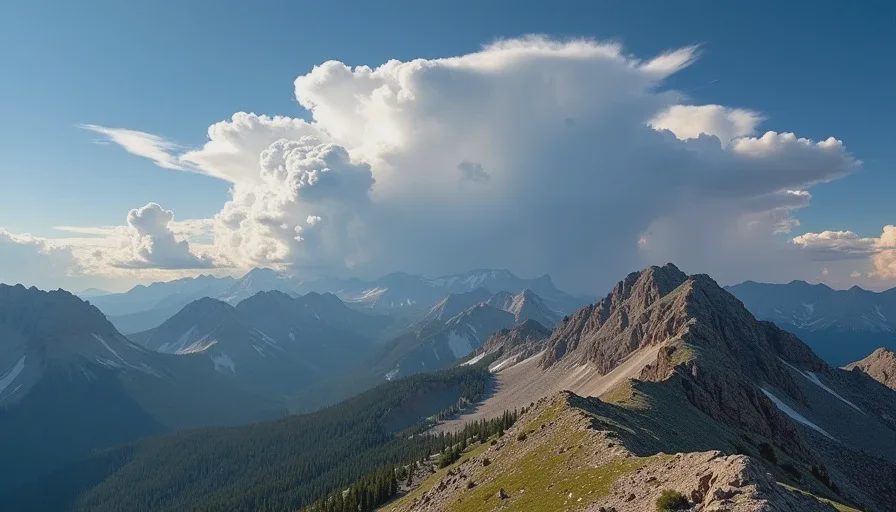
I've been caught above treeline in a lightning storm exactly once, and once was enough. The rules below aren't borrowed from a checklist — they're the ones I've carried every summer since that afternoon, and they're the heart of how I practice high altitude hiking safety in the Colorado mountains.
The Rules
The rule is simple, and I don't negotiate with it: be below treeline by eleven in the morning, or sooner if the first cloud of the day starts growing taller than it is wide — whichever comes first. Most people who get caught didn't fail to know the rules. They failed to obey them at the moment the rules mattered, which is a different problem and a harder one.
The Timing Rules
Start early enough that the day's high ground is done by late morning. This isn't a preference; it's the schedule the mountains keep.
Below treeline by 11 a.m., or the moment any cumulus tower grows vertical — whichever comes first.
Learn the 30/30 rule: if the gap between flash and thunder is thirty seconds or less, the storm is close enough to act — get to a safe place. And stay put for thirty minutes after the last thunder you hear.
Count the gap in miles: five seconds of gap equals about one mile. When you can count to thirty, the storm is roughly six miles out and closing faster than you can walk.
If You're Caught, in Order
Get off the ridge. Drop a few hundred feet below the high point, off the skyline, away from anything that stands out.
Avoid the obvious traps: lone trees, shallow caves and rock overhangs, open water, and anything metal.
Spread out. If you're with people, separate by at least fifty feet so one strike doesn't take a group.
Crouch on the balls of your feet, feet together, hands over your ears. Do not lie flat. You want the smallest, lowest target you can make.
Why These Rules
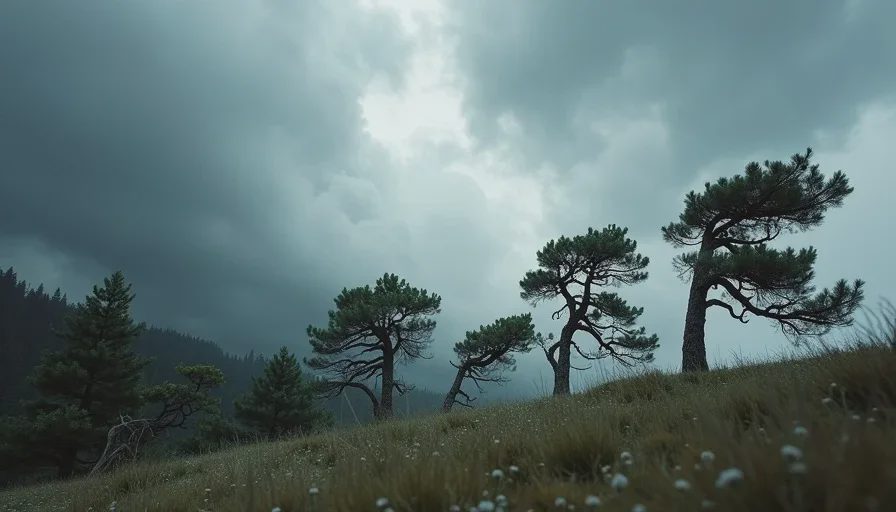
None of this is about predicting lightning — it's about not being the tallest, most conductive thing in the landscape when it arrives. Lightning is the one mountain hazard you can't out-think in the moment, so the thinking has to happen before you're in the open. This is mountain weather decision making at its most basic: the forecast, the clock, and the sky, used together and checked against each other all day.
Lightning Is Where You're Standing
A strike can reach the ground well ahead of the rain, sometimes miles from the storm's core. Blue sky directly above you means nothing — the bolt that gets you can be coming from the storm behind the ridge, not the one you're watching. That's the bolt from the blue, and it's the reason I treat the whole afternoon as the danger window, not just the minutes when the sky looks bad. High altitude hiking safety is mostly about position and timing, and both have to be managed hours ahead of the moment they matter.
The Math That Sets the Schedule
The flash-to-bang count is the tool I trust most, because it turns fear into arithmetic. Sound travels about a mile in five seconds, so you can place the storm in your head. At thirty seconds, the strike is six miles out — close enough that the next cell could easily put one down your ridge. By the time you've counted ten, you're not doing math anymore; you're in the strike zone, and the only correct response is the crouch. I count the gap the way other people count their heartbeats — continuously, without thinking about it.
The One Time I Didn't Follow My Rules
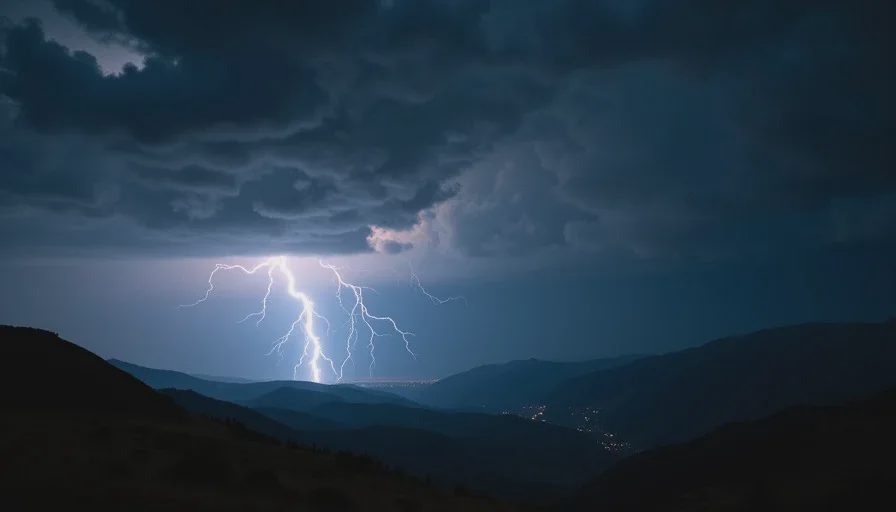
The Indian Peaks, a summer afternoon, a broad ridge above treeline. I was fifteen minutes from the meadow below, the storm had looked small and far all day, and I checked the gap on my way up the last climb: forty seconds. Then thirty-five. The rules said go — the meadow was a short walk down — and I told myself the meadow was close enough. The decision to turn back was one I made too late.
The strike hit an outcrop maybe two hundred yards upslope of me. The air went sharp and wrong, my hair lifted, and I dropped into the crouch in the open — no trees, nothing to shelter under, the exact mistake I had lectured myself about for years. I counted the gap again, very carefully: eight seconds. Eight. I stayed in the crouch until my legs shook, waited out the cell, and walked the last mile to the meadow with the storm rolling east behind me. No one was hurt. That is the only reason this is a story and not something heavier, and I have never stopped being aware of that.
What Changed Afterward
The 30/30 rule became a stop sign instead of a suggestion, and I started leaving an hour earlier. I also stopped keeping "close enough" as a category in my head — the meadow is never as close as the storm is, and the math doesn't care how good the day had been until then. I still check the gap without thinking about it, all summer, every summer. The rules didn't change that day. I did. What I know about high altitude hiking safety, I know because I got lucky once and decided never to test it again.
The mountains are patient, and they don't grade on a curve. One steady step — but first, the right hour to take it.


No comments yet — grab the first one.