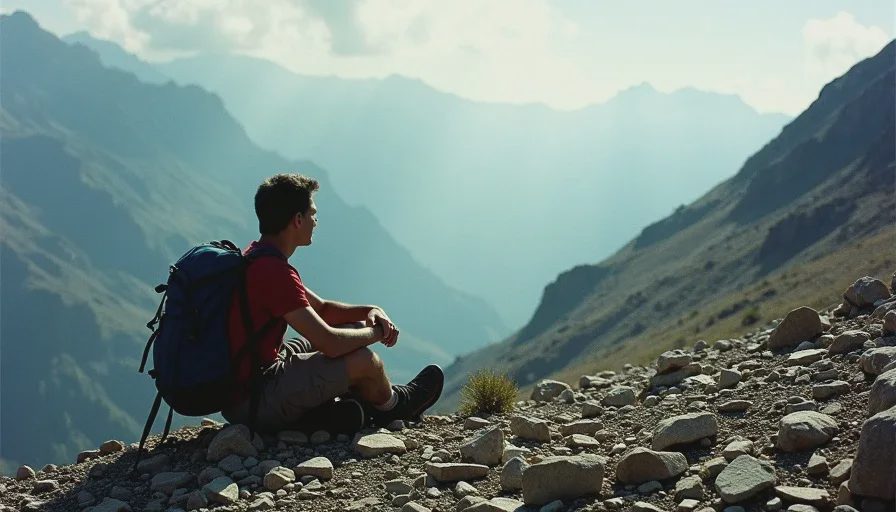
There's a version of turning around on a hike that gets told in the abstract — a line in a safety article about "knowing when to bail," delivered like a simple math problem. It isn't. The actual moment, at altitude, after hours of effort, is a small interior event with a thousand moving parts: ego, fatigue, the voice that keeps score, and the quieter voice that reads the sky. This is the story of one such moment, at 13,400 feet on a Colorado fourteener, and what was actually happening in my head when I decided to go down.
The Morning That Set It Up
It was a July Saturday in the Front Range, and everything had gone right. The forecast had been stable for three days. Thea had driven me to the trailhead at 5:30 and we'd shared coffee from the thermos — coffee I'd roasted the week before — while the parking lot filled with headlamps and the sound of people layering up. I started at six, moving well, feeling the particular lightness of a day when the body cooperates. I remember thinking, at timberline, that this was the kind of morning you hope for.
The Long Climb and the Small Crack
By 12,000 feet the climb had settled into the familiar rhythm: switchbacks, talus, the occasional glance at the summit still far above. By 12,800 I was running a little low on water, which happens when you underestimate a warm morning. Not a problem. Manageable. I rationed it and kept moving. It's the small things that precede the large ones, and in retrospect the water was the first small thing.
The Moment at 13,400
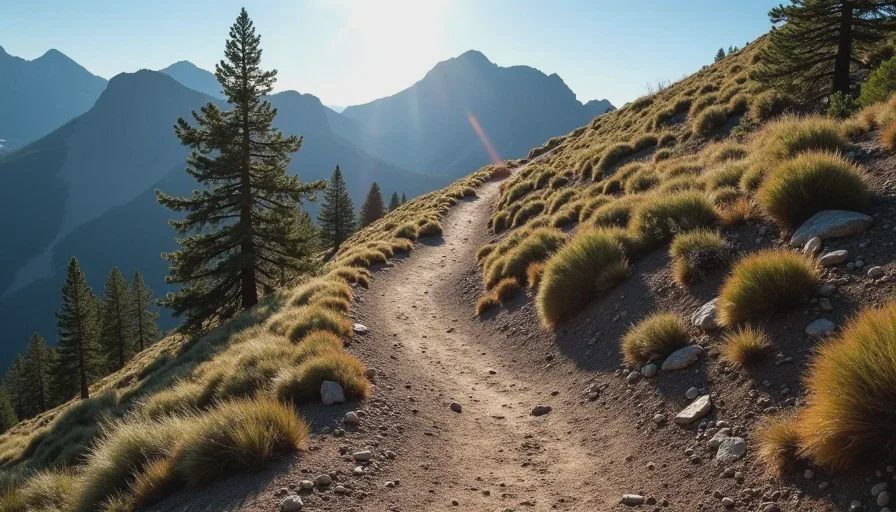
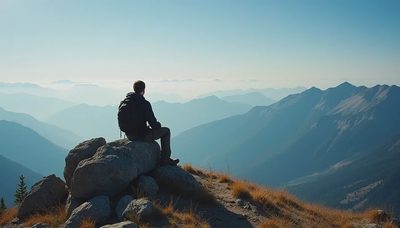
I reached 13,400 feet at a little past 9 AM. The summit was in reach — not easy, but reachable, with the same kind of effort I'd already spent. And that's exactly when my head stopped cooperating. It wasn't dramatic. No panic, no fear. Just a sudden, clear, unarguable sense that the day was done for me, and that continuing would be a performance for an audience that didn't exist.
What Was Actually Going On
Let me be precise about the interior state, because this is the part nobody writes down:
The conditions were fine. Sun, light wind, a few clouds building politely in the distance.
My body was tired but not broken. Legs heavy, head clear.
There was no external reason to turn around. No injury, no storm, no time pressure.
And yet the motivation was gone, the way a struck bell goes quiet — the decision to descend arrived whole, not argued into existence.
What I've come to understand is that the psyche keeps its own altitude log. The mind at 13,400 feet has spent hours negotiating with fatigue, managing discomfort, and suppressing the thousand small voices that ask why you're doing this. On a good day, the summit itself is the payoff that silences them. On this day, the voices were winning, and I recognized the pattern before it finished.
The Decision and the Descent
I turned around at 13,400 feet. I didn't talk myself into it, and I didn't talk myself out of it. I sat on a rock, drank half of what remained of my water, ate a bar, and started down. The descent was ordinary — a few hours of walking, a pair of day hikers asking if I'd summited, a parking lot full of the same cars I'd left that morning. Thea asked how it was when I got home, and I told her the truth: the mountain was fine. I was the one who'd decided to stop.
The No-Regret Part
Here's what I want to say plainly, because it took me years to believe it: I have never once regretted that day, and I've never once felt like the mountain "won." The mountain isn't keeping score. The only scorekeeper was the voice that told me quitting equals weakness, and that voice is wrong in a way I've now verified in the field, repeatedly, over a decade of walking. On the days I turned around, I woke up the next morning grateful and intact. On the days I pushed through a genuine objection, I paid for it in smaller currencies — a headache, a hollow feeling, a ruined next day.
Across a decade of walking, I've collected the patterns that tend to precede an honest turn-around:
A morning that started off rhythm — rushed, wrong breakfast, a bad night's sleep
A steady erosion of small reserves: water, calories, warmth, time
A summit that starts to feel like a destination rather than a place
The creeping sense that continuing would be for the sake of the record
The skill of turning around on a hike is a real skill, and like any skill it gets easier with practice. Not because you get better at quitting — because you get better at distinguishing the ego's complaint from a real signal. The summit will be there next year. The walk is what you keep. One steady step. Whether it's toward the top or back to the trailhead, both directions are honest walking.
No comments yet — grab the first one.