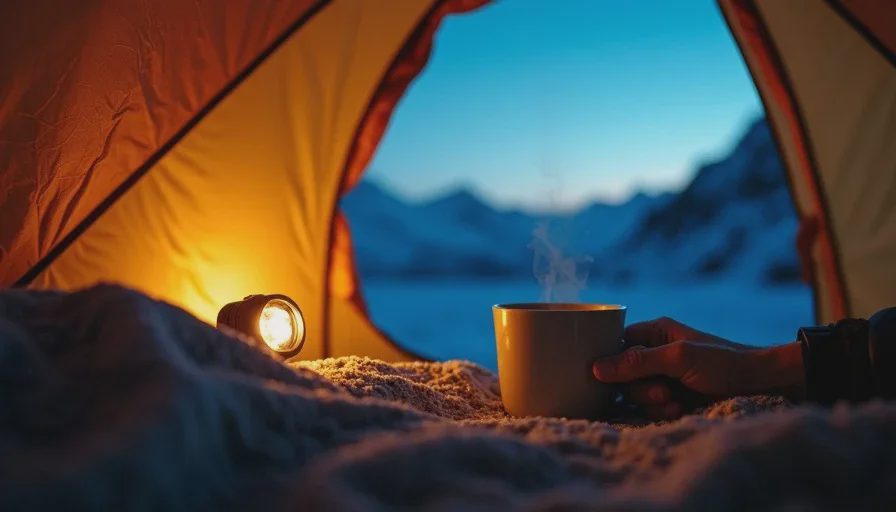
The alarm goes off at 3:47 and for a moment the tent is a black envelope I can't place. Then the map in my head lights up — where the trail goes, what the weather said, where I need to be by early afternoon — and the day begins. I've learned that mental preparation for long distance hiking is made in this hour, in the dark, before anyone is watching. It's the most honest hour of the trip, and I've come to look forward to it.
The First Decision of the Day
I make the decision to go the night before, so that four in the morning holds no arguments — only logistics. The plan is committed, the pack is staged, and the version of me who wakes up cold at 3:47 doesn't get veto power. That's not stubbornness; it's strategy. The decision made in warmth and lamplight is the only decision I can trust at that hour.
I Decide the Night Before
The ritual is boring on purpose. I lay out every layer, check the filter, verify the forecast one last time, and write the day's plan on the map — start, turn, camp, bailout. Then I go to sleep knowing the work is done. Morning me is a different person, and I don't ask him to think. I ask him to execute.
The Negotiation I Refuse to Have
Every big day, a voice shows up with the coffee and says: you could start at seven. The trail will still be there. It's a reasonable voice, and the answer is always the same — no. The alpine start isn't a virtue; it's a tool. It buys you the afternoon, when the wind picks up, the thunder builds, and the snow softens. On a long day, the hour you leave determines the day you have. I stopped negotiating about it years ago, and the days got better for it.
The Ritual in the Dark
I do the same four things in the same order every time, because in the dark, order is memory. If I have to think about what comes next at four in the morning, I'm already behind. The ritual carries me through the first groggy half hour without asking anything of me.
Four Things, Same Order
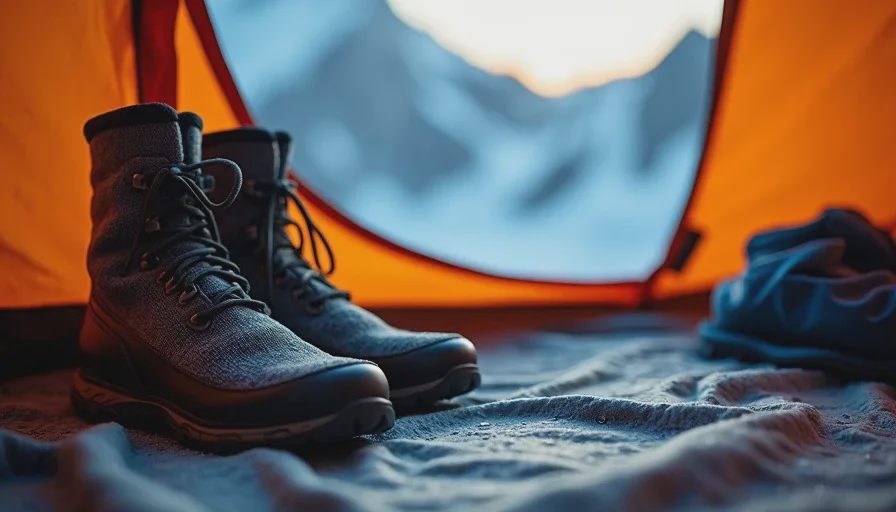
Feet first: yesterday's socks off, fresh socks on, tape over any hot spots before they become blisters.
Water and food: coffee on, then the breakfast I can actually eat before sunrise — not the one I plan to eat, the one I'll really eat.
The kit check: headlamp on low, spare battery in the pocket, filter and rain layer where I can reach them without taking the pack off.
The map in my head: tonight's camp, the turn, the bailout, spoken once out loud so the day has a spine.
What the Ritual Buys
The hour passes in motion, and that's the point. The hands do the work while the mind wakes up. By the time I'm lacing the second boot, I'm not deciding anything anymore — I'm beginning. Most of the day's anxiety evaporates in the doing of small, useful things. This is the quiet core of mental preparation for long distance hiking, as far as I can name it: replacing thought with motion at the exact hour when thinking is least reliable.
The Self-Doubt and What I Do With It
Somewhere between the coffee and the first headlamp beam, the doubt arrives. It's as reliable as the cold, and I've stopped treating it as an enemy. Doubt is a signal, not a verdict — it's the system checking its own assumptions before the expensive part of the day begins.
Three Questions When the Doubt Comes
Am I rested? Not "do I feel like it" — I never feel like it at 4 a.m. Rested means: did I sleep, eat, and stay hydrated yesterday? If yes, the doubt is the dark talking.
Is the weather honest? What did the forecast actually say last night, and does the sky outside agree with it? If the forecast says clear and the sky says otherwise, that's a real signal worth listening to.
Does the plan still fit this day? Conditions change in the mountains; a plan is a starting point, not a contract. If the snowline came down or the creek came up, the plan changes — and changing it is not failing.
If the three answers hold, the doubt is filed away and I walk. If they don't, I change the plan before I leave the tent. Turning around on a hike is a plan too, and I've never regretted the turns I made early.
Walking Into the Dark
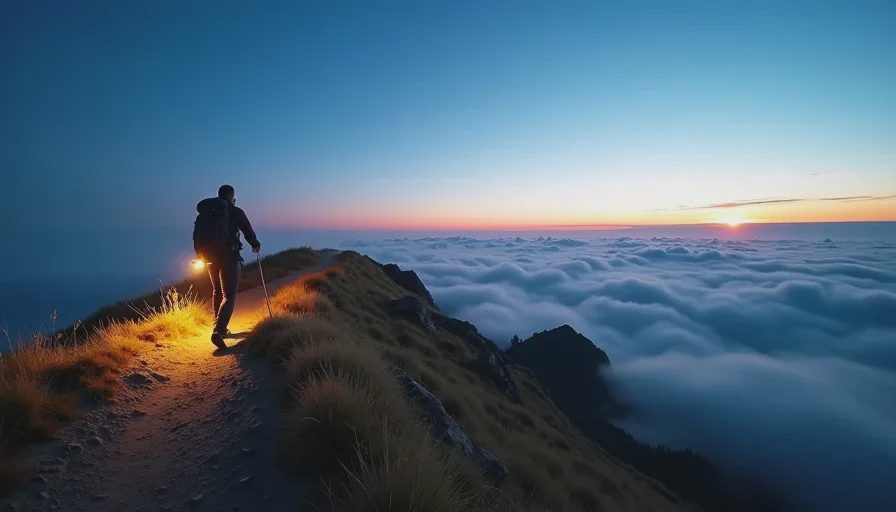
The first hour is the loneliest hour of a big day, and also the truest. The headlamp opens a small circle on the trail, the rhythm settles into the quiet arithmetic of steps, and somewhere in the second hour the light arrives — first as a gray seam at the edge of a valley, then as color on the far ridge. It always feels like a gift I did something to earn. This is what I tell people when they ask what I'm thinking about in the hour before dawn: not much, on purpose. Just the next step, and the one after that. One steady step, repeated until the sun agrees.
No comments yet — grab the first one.