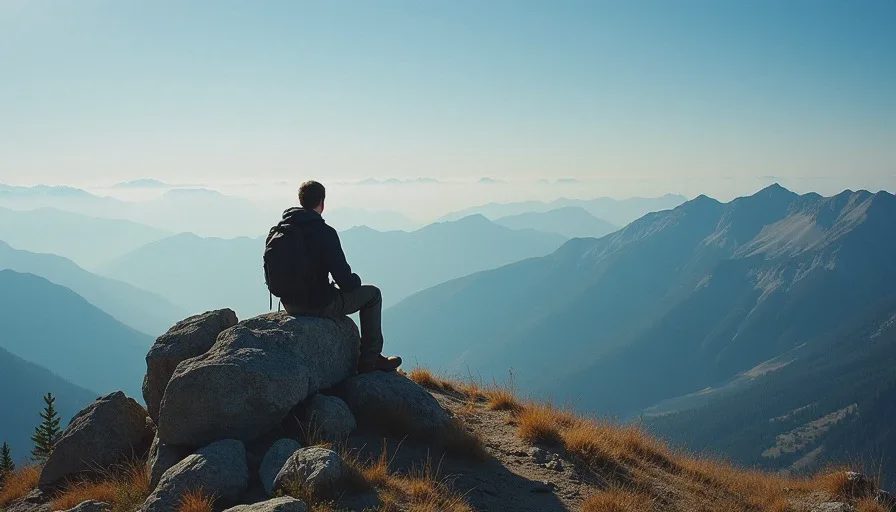
I have spent enough nights alone in the backcountry to have a long relationship with fear, and the thing I know now is that fear is not the enemy. It is information, and like all information it can be accurate or stale, useful or noise. The real skill in mental preparation for long distance hiking is not learning to ignore fear. It is learning to sort it. This framework is the sorting system I use, built from mistakes I made in my first years on trail and from the years since, watching what fear actually did for me and what it only cost me.
A Field Guide to Trail Fear
Most trail fear falls into a small set of categories, and each one deserves a different response. Once I could name the category, the fear stopped being a fog and started being a question with an answer. The naming is most of the work. Fear you cannot name will run the whole day; fear you can name fits in your pocket.
The Four Kinds I Keep Meeting
Fear of a named, present risk — a thunderstorm building over the ridge, a crossing running high, a rock band that needs real attention. This kind has an address. It points at something specific and current.
Fear of failure — the route not going to plan, running out of daylight, not making the miles I told myself I would. This one is about the future and about my own expectations, which makes it slippery.
Fear of judgment — pace, pack weight, who is watching, what a slower day says about me. This one is nearly always borrowed from somewhere else, and it never once helped me walk better.
Fear of the dark and the alone — the old signal that says stay near the fire, stay near the group. In the backcountry, with training and a working headlamp, it is mostly a memory doing a bad impersonation of a warning.
The Address Test
Here is the sorting rule that does all the work: useful fear has an address. You can point at it, name it, and do something about it. If I cannot give the fear an address — if it is just a general unease with no object and no action attached — then it is noise, and I carry it anyway without obeying it.
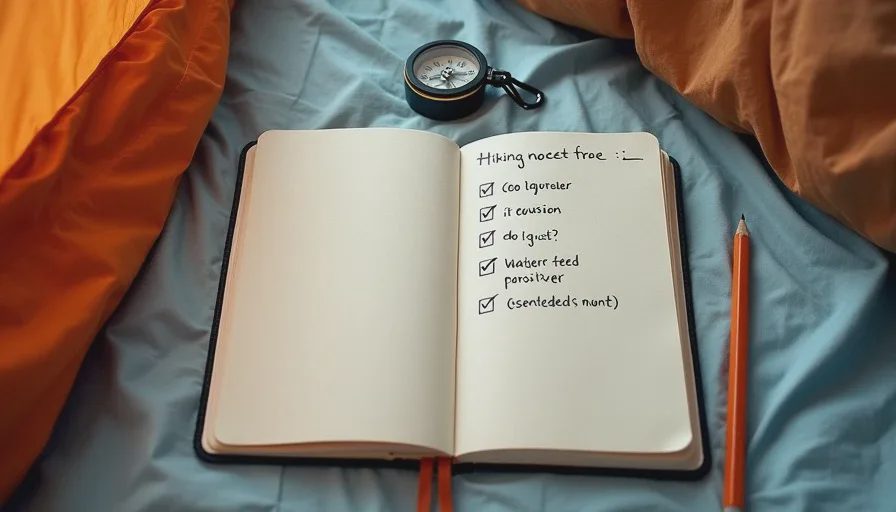
The test is four questions, in order:
What exactly am I afraid of? Name it in one sentence.
Does that thing exist right now, or is it a story about later?
Is there an action I can take that changes the risk?
If there is no action, what does holding the fear cost me?
When Fear Keeps You Safe
The useful kind of fear has saved me more than once, and I can point at the specific days. On one trip, a green-black cloud built over the Divide while we were still an hour from the pass. The fear had an address: lightning on the exposed ridge above treeline. There was an action attached: turn around, drop to the trees, spend the afternoon reading in the tent. We did, and the storm put on a show over the basin that I was glad to watch from cover. That fear earned its keep.
Acting on Useful Fear
When the fear has an address, the move is not to push through it. The move is to take the action it is pointing at. Turning around is not quitting; it is the action the fear is asking for. I have walked away from summits, from passes, from route plans, and every single time the cost of the walk-back was smaller than the cost of ignoring the signal. Fear that points at a specific risk and offers a specific action is the cheapest insurance I own, and I have never once regretted paying the premium in miles.
The Fear That Is Not Mine to Keep
The other three categories are where mental preparation for long distance hiking does its real work. Fear of failure, fear of judgment, fear of the dark — none of them has an address, and none of them responds to an action. They only respond to attention, and they will take all of it if you let them. I learned this the hard way on my early solo trips, when an unnamed dread would sit on my chest at 2 a.m. and I would spend the hours building disasters in my head instead of sleeping. The mornings were fine. The mornings were always fine. The fear was not predicting anything; it was just rehearsing.
When Fear Stops You From Living
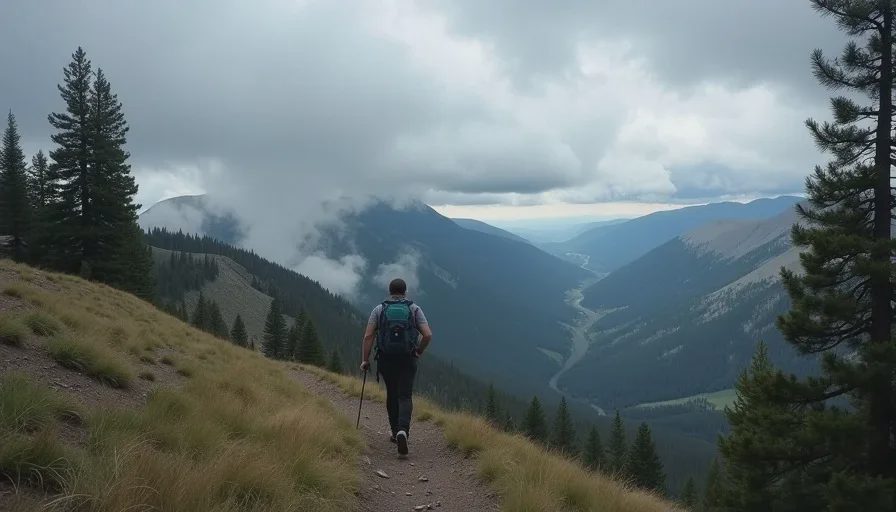
Fear that has no address does not protect you. It taxes you. It shortens the day, narrows the view, and turns a beautiful afternoon into a negotiation. The cost shows up in small ways — skipping the exposed stretch, hurrying past the overlook, cutting the trip short because the night felt heavy. That is fear taking a toll it never paid for, and the ledger does not balance on its own.
The Practice That Changed It
I do not argue with fear anymore. I sort it, answer the ones with addresses, and let the rest pass through. The daily practice is small: name the fear, run the four questions, take the action if one exists, and keep walking either way. The walk itself is the therapy. After three days on trail, the noise fades, because there is nothing to fear and nothing to perform, only ground and weather and the simple mechanics of moving through it.
None of this makes the dark less dark. It makes the dark smaller, and you bigger. For anyone doing their own mental preparation for long distance hiking, I would say start there — not with motivation, but with sorting. Learn which fears have addresses and which ones are just passing through. Then walk, and let the walking do the rest. One steady step.

No comments yet — grab the first one.