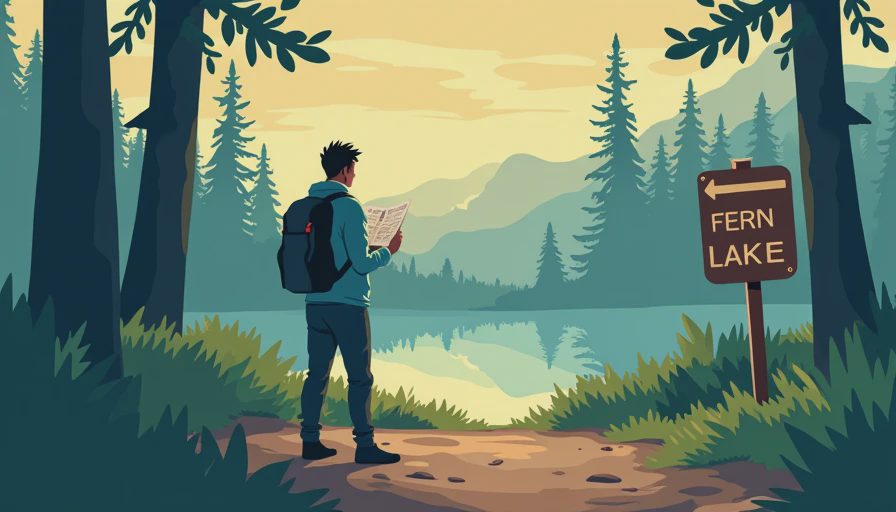
The Fern Lake Trailhead sits at the edge of Moraine Park in Rocky Mountain National Park, where the road narrows into forest and the sounds of the valley begin to fall away. The walk to Fern Lake is not difficult in the technical sense, but it is long enough, wet enough, and changeable enough to punish a hurried start. This is a route for one steady step, especially when afternoon weather gathers over the Continental Divide.
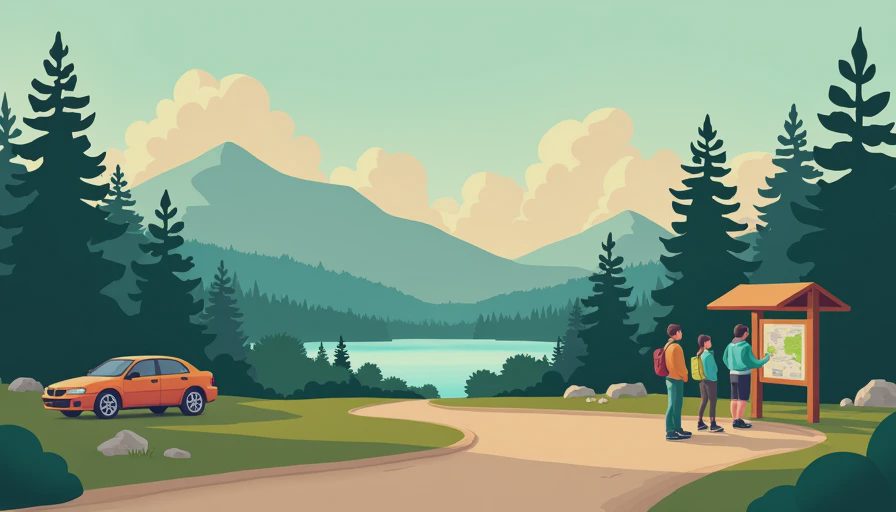
Getting to the trailhead and finding a place to park
The Fern Lake Trailhead is reached by following Bear Lake Road toward Moraine Park, then turning onto the road that leads to the trailhead area. Access details change with season, construction, snow, and park operations, so check the current Rocky Mountain National Park conditions before leaving Estes Park. Do not build your day around an old trip report that assumes the road is open.
Parking is limited, and the lot can fill early during summer weekends and fall color season. If the park is running a shuttle, use it rather than treating a full lot as a problem you can solve by circling. A shuttle schedule can also affect your return, particularly if you finish after a long day or extend the route beyond Fern Lake. Bring the small things that become annoying when left behind: water, a layer, food, sunscreen, and a map downloaded to your phone.
The trailhead is around 8,100 feet, high enough that visitors arriving from lower elevations can feel the first climb immediately. Walk slowly for the first mile. That is not a concession to weakness; it is a way to keep the rest of the day available.
What the trail feels like underfoot
From the Fern Lake Trailhead, the path follows the Big Thompson River through lodgepole pine and mixed spruce-fir forest. The first miles are generally moderate, with roots, rocks, and sections that hold mud after rain or snowmelt. The river gives the route a steady sound, but do not mistake that comfort for simplicity. Wet roots are slick, and the trail can be narrow where it crosses steep ground above the water.
The route passes recognizable landmarks, including the area around The Pool and later Fern Falls. These are natural pause points, but they also concentrate people. I prefer to take a few minutes beside the river, drink before I am thirsty, then keep moving while my legs are still warm. The forest can feel dark and enclosed early in the morning. By midmorning, light reaches through the trees in narrow, shifting columns.
The elevation gain to Fern Lake is roughly 1,400 feet over about four miles, depending on how the route and endpoint are measured. That number looks manageable on paper. The repeated short climbs, rough footing, and altitude make the return more tiring than many first-time visitors expect.
Water, weather, and seasonal changes
Water is present along much of the route, but that does not make every source suitable for drinking. Carry enough for the planned distance, and if you collect from the river or a lake, treat it with a filter, chemical treatment, or a properly maintained purifier. Do not assume clear mountain water is safe.
Summer mornings can begin cool and still, then turn warm and unsettled by early afternoon. Thunderstorms are the serious concern. The Fern Lake Trailhead route remains below treeline for most of the walk, but exposed lakeshores and open stretches are poor places to linger when thunder is audible. If the sky is building, turn around before the storm is directly overhead. A forecast is useful; watching the clouds is more useful.
In autumn, cold arrives quickly once the sun drops behind the ridge. Snow can appear on the trail earlier than expected, and icy patches may remain in shaded turns. Winter travel is a different undertaking, often involving snowshoes, route-finding, and avalanche awareness beyond what a summer trail description covers. Treat a summer mileage estimate as historical information, not a winter plan.
Timing the walk without rushing it
For a day hike, an early start is the simplest way to create room for weather, crowded sections, and a slower return. Strong hikers might reach the lake in two hours, while a measured pace with stops can take three or more. Give yourself at least half a day for the out-and-back, and more if you intend to linger, photograph, or continue toward Odessa Lake or the Flattop Mountain area where permitted and appropriate.
The best turnaround time is not based only on distance. Use daylight, forecast, group energy, and the condition of the person having the hardest day. A hiker who is quiet, stumbling, or repeatedly checking the watch may need food and a real pause rather than encouragement to push through. The route will still be there. The lake is not improved by arriving exhausted.
At Fern Lake, find a durable place to sit rather than widening the shoreline. Eat away from the water and pack every scrap. This is a busy national park route, and small careless choices accumulate quickly where many feet pass through the same narrow corridor.
A safer plan for the return
The return from the Fern Lake Trailhead route is downhill in broad terms, but downhill does not mean easy. Fatigue makes roots more dangerous, especially after rain. Trekking poles are useful here for balance, not speed. Keep one hand free when possible, and slow down before wet rock rather than braking on it.
Carry a paper map or a downloaded topographic map even though the route is popular. Cell service can be inconsistent, and a crowded trail does not guarantee that someone nearby knows where you are. Tell a person at home your route, intended turnaround, and expected return. If the parking lot is full, do not leave a vehicle illegally along the road; use the park's current transportation and parking instructions.
Wildlife deserves distance. Store food securely, never feed animals, and keep dogs out of areas where park rules prohibit them. Elk can look calm until they are not, and a close photograph is not worth making one move around you.
Is this route worth your morning?
The Fern Lake Trailhead is worth choosing when you want a substantial forest walk with water, changing light, and a clear sense of moving into the park rather than simply viewing it from a roadside pullout. It is less suitable when you need solitude, guaranteed parking, or a short walk to a viewpoint. The popularity is part of the route's reality, not a flaw to be argued away.
Go early, carry enough food and water, watch the weather, and let the slow sections remain slow. The meaningful part may be a brief pause above the river, mud drying on your boots, or the moment the trees open and Fern Lake appears without ceremony. That is enough. One steady step.




No comments yet — grab the first one.