The first time I settled into Craig Childs author territory, I was not looking for a standard nature book. I wanted writing that could hold the silence of a dry wash, the unease of a storm building beyond the ridge, and the long attention required to notice what the trail usually hides. Childs writes for that kind of reader. His work is not a checklist of destinations. It is a way of looking.
For hikers and backpackers, that distinction matters. A route description tells you where the water might be. A good field writer makes you understand why water changes every decision in the desert. Childs brings archaeology, geology, natural history, and personal risk into the same frame without turning the landscape into a stage set.
Why Craig Childs Author Matters to Hikers
The appeal of Craig Childs author is partly physical. His landscapes have heat, grit, wind, and distance. You can feel the cracked skin around your knuckles and the hard edge of a sandstone ledge under your palm. I read his work differently from a guidebook because he does not reduce a place to mileage, elevation gain, and a recommended season.
That does not mean his books are vague. They are attentive. A dry landscape becomes a record of former rivers, animal movement, human presence, and weather that may arrive after an apparently empty week. For an experienced hiker, this is useful training. It encourages you to read the terrain before relying on the route line on a phone.
His writing also leaves room for fear. A canyon can be beautiful and still become dangerous when rain falls upstream. A remote crossing can be manageable in the morning and a serious problem by afternoon. That plain acknowledgment feels familiar to anyone who has stood below treeline, watched clouds gather, and realized the plan needs to change.
Where to Begin With Craig Childs Author
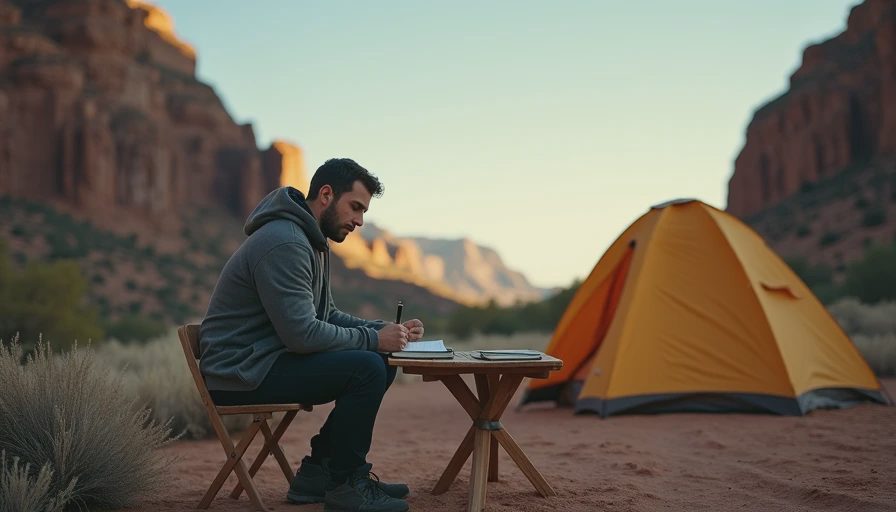
The best starting point depends on what you want from the reading. The Secret Knowledge of Water is a natural choice for anyone drawn to desert travel. Water there is not scenery; it is the organizing fact of the journey. The book rewards slow reading, especially before a trip through Utah, Arizona, Colorado, or another dry region where a missed source can reshape the entire day.
House of Rain moves toward the ancient Southwest and the question of how people live with a demanding landscape. It is not a modern route guide, and it should not be treated as one. Its value is in expanding the time scale. A canyon is not merely the place beneath your feet on Saturday. It contains traces of decisions made across centuries.
Atlas of a Lost World follows an older geological story, reaching toward the landscape and creatures of the Ice Age. It is a good companion for a winter evening when the high country is closed and the pack is hanging by the door. Craig Childs author is most rewarding when the book changes how you see an ordinary walk afterward.
The Field Notes Behind the Big Ideas
What I trust in Craig Childs author is the attention paid to small evidence. A track pressed into mud, a pocket of shade, a sudden change in stone, or the direction of birds can carry more meaning than a dramatic overlook. This is close to the practice of navigation. Before I make a route decision, I want the broad map, but I also want the immediate ground to confirm what the map suggests.
That habit of observation is one reason these books belong in a backpacker’s off-season reading stack. They sharpen curiosity without pretending curiosity is a substitute for preparation. You still need a reliable map, enough water, weather information, and a turnaround plan. A book can teach attention. It cannot make a flash flood less powerful.
Childs also writes across boundaries that are often kept separate. Science does not sit in one room while story sits in another. Personal experience, field research, and cultural history meet in the same paragraph. For readers who are tired of polished outdoor narratives, that mixture has weight.
Reading Him Before a Desert Trip
I would not read Craig Childs author as a source for current conditions. Desert roads wash out, springs fail, permits change, and a canyon described beautifully in a book may have different access rules today. Pair the reading with current land-manager information and a map you know how to use offline.
What the books can provide is a mental rehearsal. Notice how exposure changes your pace. Consider where shade might matter more than distance. Think about what you would do if a partner became overheated, a water source was dry, or a storm made the planned exit unsafe. Those questions belong in trip planning before the first boot touches sand.
I often make a short note after reading: What would I observe here? Where would I stop? What would make me turn around? That exercise is more useful than copying a list of scenic locations. It moves the book from entertainment into preparation without asking it to become a manual.
The Quiet Difficulty of His Writing
The work is not always easy company. Craig Childs author can take a reader into uncertainty, deep time, and places where human control feels thin. That is part of the point, but it means these are not books I rush through on a crowded train. I read a few pages, close the cover, and let an image remain for a while.
There is also a useful refusal of simple answers. The desert is not presented as an empty wilderness waiting for a visitor’s meaning. People have lived with these places, studied them, moved through them, and left evidence behind. That awareness gives the landscape more depth and asks the reader to approach with humility rather than ownership.
For me, this is where the Craig Childs author conversation becomes larger than one writer. It becomes a question about outdoor attention. Are we collecting views, or are we learning to see? Are we walking to finish a route, or are we allowing the route to alter our pace and judgment?
A Small Reading List for Long Winter Nights
Start with The Secret Knowledge of Water if your mind is on desert logistics and the meaning of scarcity. Choose House of Rain if you want archaeology and human history woven through the Southwest. Pick Atlas of a Lost World for a longer geological perspective. Apocalyptic Planet offers a broader look at extreme environments and the forces that shape them.
Read slowly. Keep a map nearby, not to track every location but to understand the scale between them. When a passage brings back a place you have walked, compare memory with description. The difference is often revealing. We remember the overlook; a careful writer remembers the wind arriving ten minutes earlier.
That is the lasting gift of Craig Childs author: not a promise that the next trip will be easier, but an invitation to become more awake inside it. On a trail, that is enough. One steady step.


No comments yet — grab the first one.